FCC Robot Import Ban Could Protect U.S. AI, or Slow Robotics Research
The FCC’s foreign robot ban aims to protect U.S. AI and robotics, but reliance on low-cost Chinese hardware could raise costs and slow research at universities.
Summary
MIT Technology Review reports that the Federal Communications Commission imposed a broad ban on imports of advanced foreign-made robots, including humanoid, four-legged, and wheeled systems. The article was published on August 3, 2026, and says the decision came during the preceding week, although it does not give the order’s exact date. The FCC offered two main justifications: connected robots could gather sensitive information inside homes, businesses, or protected facilities, and shielding American manufacturers from Chinese competition could help create a more secure domestic supply chain. The publication corrected an earlier version that had mistakenly attributed the order to the Federal Trade Commission.
The policy extends a familiar U.S. response to inexpensive Chinese strategic technologies. Washington has previously used tariffs and procurement restrictions to limit dependence on Chinese solar panels, electric vehicles, and drones. Robotics is different, however, because modern machines increasingly depend on AI models to perceive their surroundings, manipulate objects, and learn new tasks. The article therefore interprets the FCC action as part of a wider protectionist AI strategy. It also notes reports that the Trump administration is considering restrictions on open-source Chinese AI models that compete with products from OpenAI and Anthropic at lower cost; according to an estimate cited by the article, such restrictions could prevent businesses from securing $25 billion in annual savings.
Cybersecurity provides a concrete argument for tighter controls. An FCC document cited an incident in which one person reportedly obtained control of 7,000 robotic vacuum cleaners. Gavin Kenneally, CEO of U.S.-based Ghost Robotics, which makes quadruped inspection robots, said stronger security requirements and fairer competition could benefit customers and the industry. The FCC’s position also reflects a significant change in how Washington views humanoid robots: rather than treating them as experimental machines known mainly for awkward demonstrations, the government is classifying them as part of a strategically important AI sector.
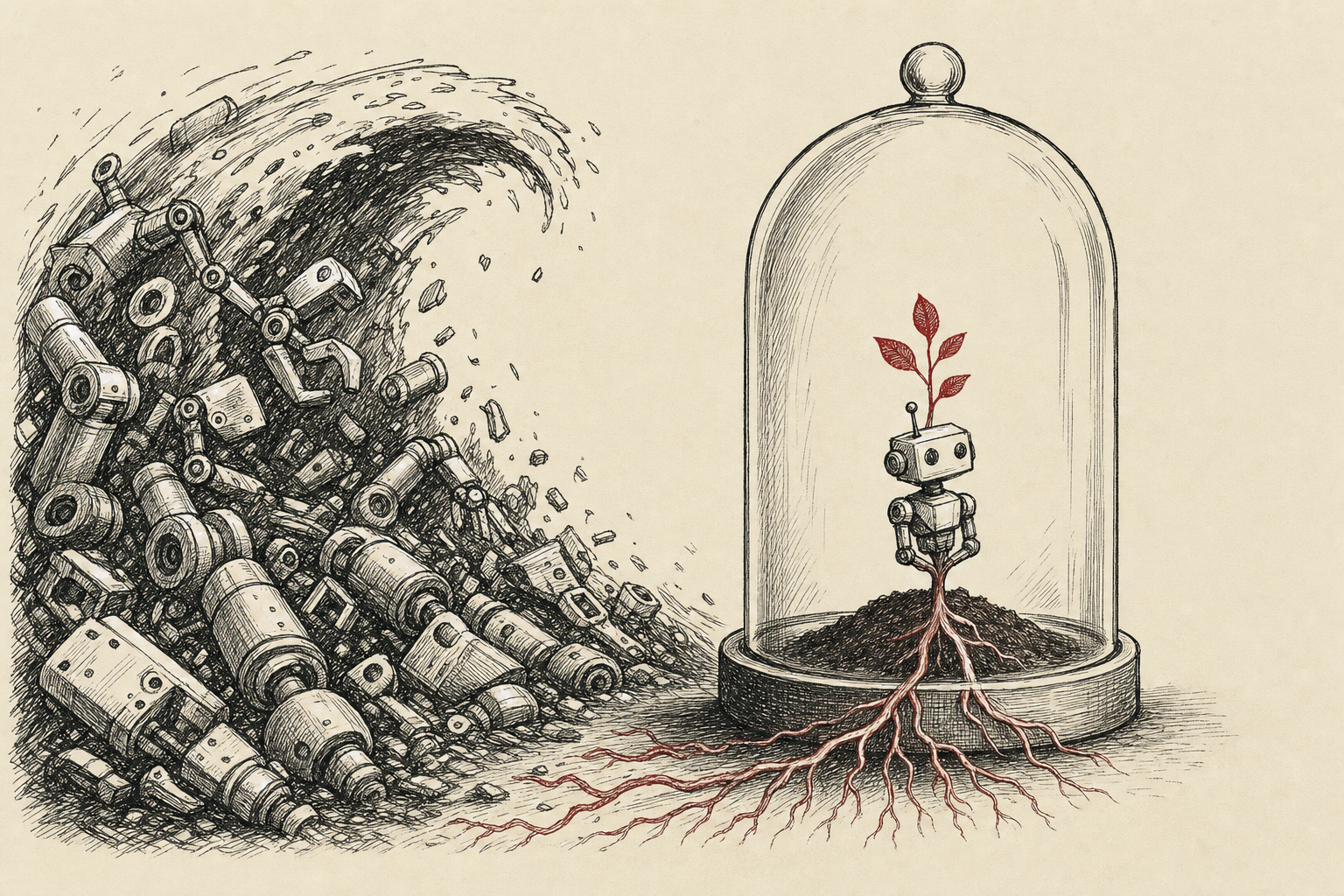
The central risk is that American robotics development currently depends heavily on affordable Chinese hardware. Aaron Prather of the Association for Advancing Automation said an internal review found that 90% of recent robotics research papers from U.S. universities used machines made by Unitree, a leading Chinese robotics company. The price difference is substantial: the article puts a Unitree quadruped at about $4,600, compared with as much as $278,000 for a comparable Boston Dynamics machine. Universities and companies use these less expensive platforms to build fleets that repeatedly practice tasks such as making food or handling laundry. Removing them could reduce experimentation, increase research costs, and ultimately slow the domestic industry the rule is intended to support.
The competitive backdrop underscores that tension. Unitree was reportedly preparing to go public during the week of publication at a target valuation of nearly $6 billion. No U.S. robotics company offered a direct commercial comparison: Figure was not selling humanoids at scale, while 1X had not begun shipping robots to homes. Google nevertheless demonstrated continuing technical progress by announcing an AI model designed to help humanoids learn tasks faster, including tying a trash bag, a meaningful manipulation challenge for unreliable robotic hands. The article’s interpretation is that the order marks robotics as a new frontier of U.S. AI industrial policy. Its actual effects remain uncertain because the FCC included multiple carve-outs whose scope could determine whether the rule strengthens domestic production or deprives American researchers of essential tools.
Positives
- The FCC order explicitly treats advanced robotics as a strategic AI industry and seeks to strengthen the security and resilience of the U.S. robotics supply chain.
- An FCC document cited the reported compromise of 7,000 robotic vacuum cleaners, providing a specific example of why connected robots may require stronger cybersecurity safeguards.
- Ghost Robotics CEO Gavin Kenneally said the policy could create a fairer competitive environment while encouraging stronger security protections for customers.
- Google announced an AI model intended to help humanoid robots learn tasks faster, with tying a trash bag presented as evidence of progress in difficult robotic-hand manipulation.
- Unitree’s reported plan to seek a valuation of nearly $6 billion shows that commercial interest in advanced robotics is expanding beyond experimental demonstrations.
Risks & concerns
- An industry-group review found that 90% of recent U.S. university robotics papers relied on Unitree machines, indicating that the import restrictions could disrupt a large share of academic research.
- A Unitree quadruped costs about $4,600, while the article says a comparable Boston Dynamics robot can cost as much as $278,000, leaving researchers without an equivalently affordable domestic option.
- Major U.S. humanoid companies were not yet shipping at comparable scale: Figure had not reached volume sales, and 1X had not started delivering robots to homes.
- The administration’s separately reported consideration of restrictions on open-source Chinese AI models could deny businesses an estimated $25 billion in annual savings.
- The FCC order contains multiple carve-outs, making it unclear which machines will ultimately be blocked and how severely researchers, companies, and consumers will be affected.