Google Open-Sources WeatherNext AI After 24-Hour Leap in Cyclone Forecasting
Google says WeatherNext adds 24 hours of cyclone forecast skill, generates 1,000 scenarios, and is now open source for researchers and weather agencies.
Summary
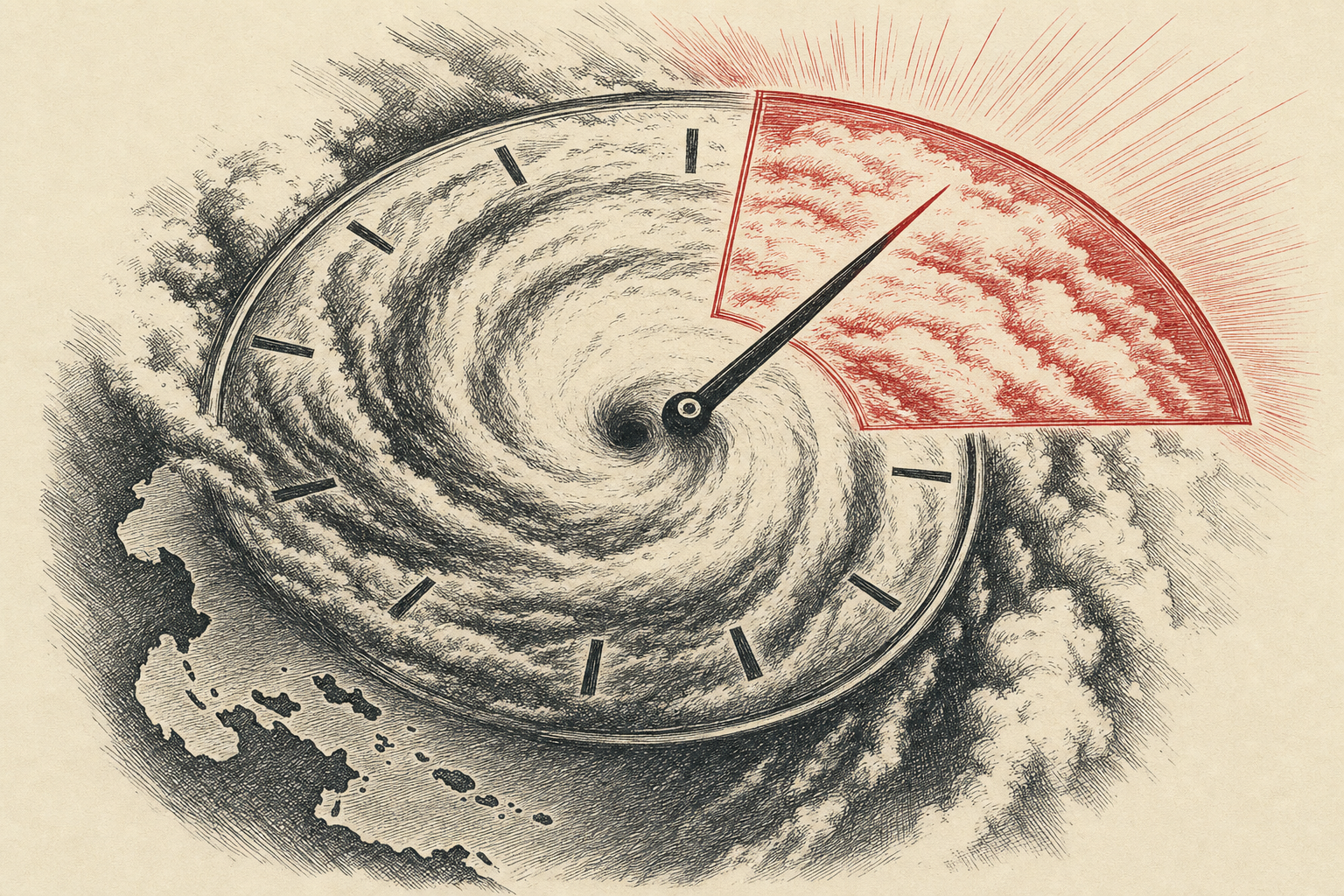
Google DeepMind announced on August 6, 2026, that WeatherNext Cyclones can forecast tropical-cyclone tracks, intensity and wind structure with what it describes as state-of-the-art accuracy. According to results published in Nature, its three-day predictions are, on average, as accurate as the two-day forecasts produced by previous leading systems. That gain represents more than 24 hours of additional useful lead time and, based on forecasting trends over the past 20 years, roughly a decade of conventional meteorological progress. The significance is substantial because tropical cyclones have caused more than 700,000 deaths and $1.4 trillion in global losses over the past 50 years.
WeatherNext addresses a persistent technical divide in cyclone forecasting. Large-scale atmospheric circulation determines a storm’s route and is generally handled by global models, while intensity depends on localized processes near the cyclone’s core that traditionally require high-resolution regional systems. Google says its single model predicts both dimensions, as well as the storm’s broader wind structure. It was co-trained on nearly 20 terabytes of atmospheric information and the IBTrACS archive of almost 5,000 historical storms. Evaluation used cyclones from 2023 and 2024 and compared deterministic and probabilistic performance with established systems, including ECMWF-ENS for tracks and HWRF for intensity.
The system uses Functional Generative Networks to produce many plausible forecasts rather than one definitive outcome. A 15-day prediction can be generated in under a minute on a Google TPU, while ensembles can be converted into localized probability maps for tropical-storm and hurricane-force winds. Google expanded the operational ensemble from 50 forecasts in 2025 to 1,000 scenarios in 2026, aiming to expose low-probability but dangerous outcomes such as rapid intensification. DeepMind says the technology assisted the US National Hurricane Center during the 2025 season by anticipating Hurricane Melissa’s rapid strengthening and landfall in Jamaica, contributing to an earlier warning.
A notable technical finding is that WeatherNext Cyclones operates with inputs at a comparatively coarse 28-by-28-kilometer resolution, which Google characterizes as 100 times coarser than traditional approaches used for intensity prediction. WeatherNext 2-mini works at an even coarser 111-by-111-kilometer resolution and can run on one TPU through a free public Colab notebook. The source says researchers do not yet fully understand how the models retain such strong predictive performance at these resolutions, making the underlying mechanism an open scientific question rather than a settled explanation.
Google is releasing the code and model weights for WeatherNext Cyclones, WeatherNext 2 and WeatherNext 2-mini. WeatherNext Cyclones is the version used during the hurricane season, while WeatherNext 2 is a subsequent update that the company says it operationalized in October, although the announcement does not specify the year. Researchers, forecasting agencies and nonprofits may adapt the releases for academic work, operational forecasting or localized systems. Google has also expanded Weather Lab to display cyclone tracks alongside predictions for temperature, precipitation, wind speed and other conditions as part of Google Earth AI.
The practical promise is earlier preparation for evacuations, emergency response and infrastructure protection, particularly in cyclone-exposed communities. However, the performance claims presented here come from Google’s announcement and associated paper, and real-world reliability across future seasons, regions and unusual storms will require continued evaluation by independent researchers and meteorological agencies. AI output also does not replace official warnings: Google explicitly directs the public to local meteorological agencies and national weather services. Adoption, localization and an explanation for the model’s unexpected low-resolution accuracy remain the main issues to watch.
Positives
- WeatherNext Cyclones delivered more than 24 hours of average lead-time improvement for forecasting cyclone tracks, intensity and wind structure in evaluations of storms from 2023 and 2024.
- Google reports that a three-day WeatherNext forecast matches the accuracy that earlier leading models achieved at a two-day horizon.
- The system can generate a 15-day forecast in under one minute on a TPU and now produces 1,000 possible scenarios for each cyclone, up from 50 in 2025.
- DeepMind says WeatherNext helped the National Hurricane Center anticipate Hurricane Melissa’s rapid intensification and 2025 landfall in Jamaica, supporting an earlier warning.
- Google is releasing code and model weights for WeatherNext Cyclones, WeatherNext 2 and WeatherNext 2-mini, with the compact model able to run on a single TPU in a free Colab notebook.
Risks & concerns
- Researchers do not yet understand how WeatherNext maintains high accuracy with 28-by-28-kilometer inputs, leaving an important aspect of its behavior unexplained.
- The announcement’s performance evidence is based on historical cyclones from 2023 and 2024, so continued testing is needed to establish reliability across future seasons and atypical storms.
- Probabilistic ensembles can represent uncertainty but cannot eliminate it, particularly for rare and consequential events such as rapid intensification.
- Operational use may still depend on access to suitable computing resources, local data, agency expertise and integration with existing forecasting workflows.
- Google states that WeatherNext predictions are not substitutes for official forecasts or warnings from national and local meteorological authorities.