Hidden AirTag Traces Rare Book Destruction to Amazon AI Facility
An AirTag led 404 Media to Amazon's Las Vegas VGT3 facility, where rare books are destroyed and scanned for AI, raising serious preservation concerns worldwide.
Summary
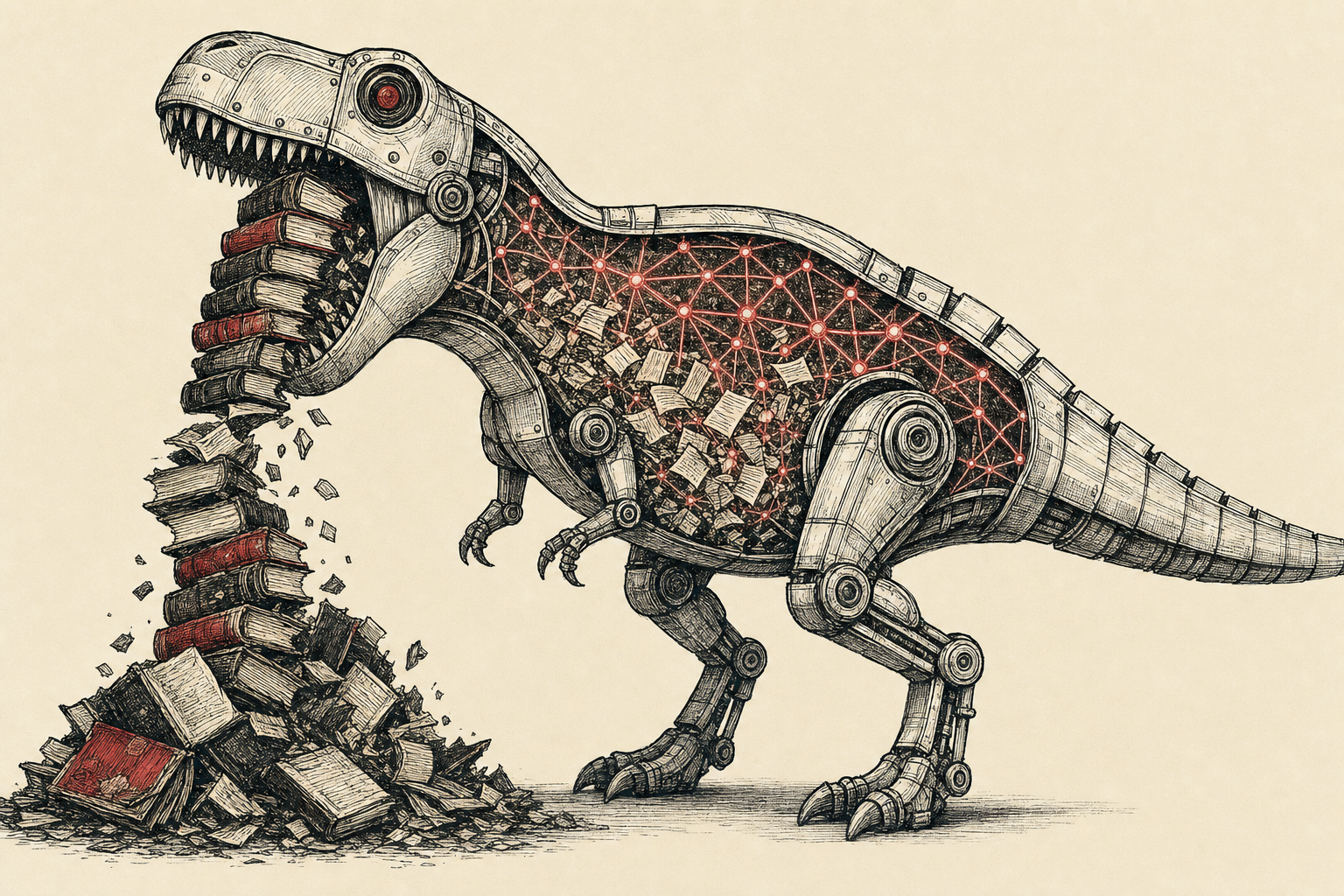
On August 17, 2026, Ars Technica relayed 404 Media’s investigation using an AirTag hidden in a bulk book order, confirming booksellers’ roughly yearlong suspicion that Amazon destroys rare books for scanning. The tracker reached Amazon’s Las Vegas VGT3 AI training facility, where workers remove books from their spines and scan the pages. A warehouse emblem showed a Tyrannosaurus rex devouring a book. Amazon declined to address AI training, saying it buys books commercially to improve customer products and services. Amazon is developing frontier models against Google, OpenAI and Anthropic, while Anthropic and xAI say they do not train on rare or antique books. Worker posts said VGT3 exhausted its book supply earlier in 2026 and risked closure, but it remains operational and systematically destroys new bulk deliveries.
After a reported historic sales year, booksellers theorized that AI companies target inexpensive, unique ISBNs; VGT3 workers said they scan barcodes or ISBNs before books, supporting that view. Purchases often involve older, untranslated or poorly distributed works rather than valuable first editions, but these may retain historical, intellectual or sentimental importance. Scottish bookseller Derek Walker warned that a little-known antique could be the only surviving copy of an edition, while Michael Burry reportedly called destructive scanning “evil incarnate.” Workers described the flexible, repetitive job positively, and Reddit users disputed whether dusty inventory should be preserved. Critics fear companies masking their identities as buyers will withhold scans to protect proprietary training data, leaving only model-generated, censored or paywalled fragments instead of public access.
Positives
- 404 Media’s hidden AirTag provided physical evidence connecting a bulk rare-book order to Amazon’s Las Vegas VGT3 facility.
- A reported historic sales year brought booksellers revenue from AI companies’ demand for older, inexpensive and unusual works.
- VGT3 workers described the repetitive scanning work as a pleasant opportunity offering flexible hours.
- Nondestructive scanning remains an available alternative for preserving physical books while digitizing their contents.
Risks & concerns
- Amazon’s VGT3 team systematically removes books from their spines and destroys them after scanning.
- VGT3 completely exhausted its book supply earlier in 2026, indicating demand large enough for workers to fear the facility would close.
- Older untranslated or poorly distributed books may carry historical, intellectual and sentimental value despite having little monetary value.
- Derek Walker warned that destructive buyers could eliminate the only known surviving copy of an antique edition.
- Amazon did not address AI training directly, while masked purchasing and guarded datasets prevent booksellers from assessing preservation risks.