Jill Lepore Warns Silicon Valley’s Artificial State Threatens Democracy
Jill Lepore warns Silicon Valley's corporate “artificial state” is usurping democratic power as tech leaders misread science fiction, history and voters.
Summary
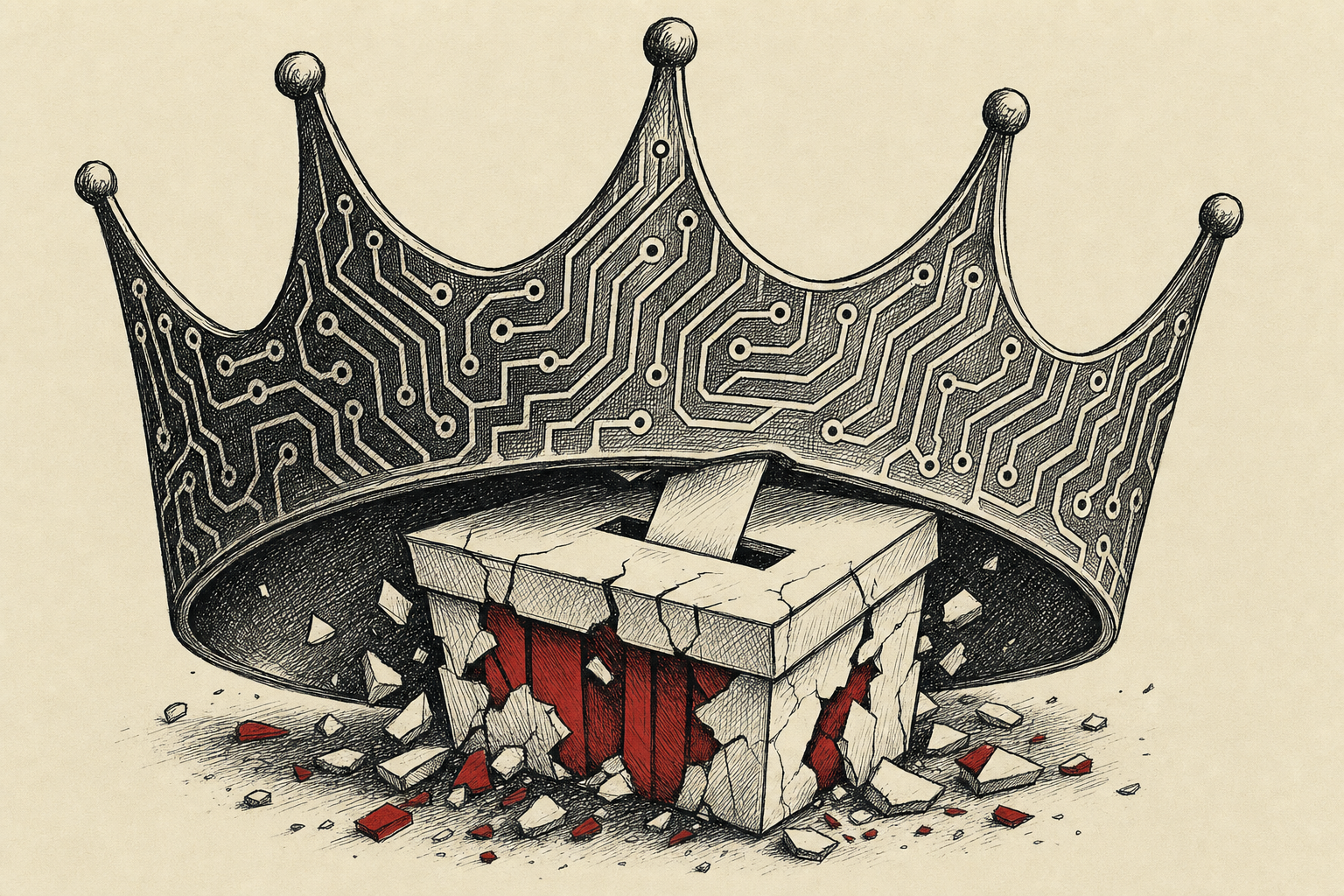
Harvard historian Jill Lepore, a New Yorker writer and recent Pulitzer winner for her U.S. Constitution history, tells TechCrunch’s Equity that “The Rise and Fall of the Artificial State” traces machine government from centuries of technocracy to Silicon Valley. She says companies assumed state functions without consent, turning democracy into rule by algorithms, corporations and machines. Benign pursuits of efficiency, speed and lower costs became deliberate usurpation during the past 20 to 25 years, following 1990s libertarian futurists. She calls the Newt Gingrich and Contract with America influenced 1996 Telecommunications Act a difficult mistake, not sinister design.
Her examples run from Apple’s January 1984 Super Bowl Macintosh ad against totalitarian IBM mainframes to Facebook News creating a “Supreme Court” around the 2016 election, Anthropic hiring a moral philosopher in 2025 to write a constitution, and Sam Altman telling Joe Rogan an AI president would be great. Jack Dorsey’s Twitter promoted a pocket town hall through its 2012 Politics and Elections Handbook, although one in five Americans had accounts, most never used them, and fewer than 10% of active users generated over 90% of political tweets. Lepore calls Twitter a distortion machine and says Elon Musk and Altman mistake warnings for manuals; Jeff Bezos’s Robert Heinlein affinity fits libertarian science fiction, while Musk’s favorites contradict his politics.
Science fiction since the 1850s, including E. M. Forster’s 1909 “The Machine Stops,” warns that machine rule consumes the natural world sustaining it. Salt Lake data center opposition exceeded 70% despite representatives’ support, suggesting electoral costs if democracy remains functional. Lepore also reaffirms her decade old rejection of Clayton Christensen’s disruptive innovation as bad history and urges historians and technologists to develop guardrails comparable to those created for automobiles.
Positives
- Well over 70% opposition to a Salt Lake data center shows local voters scrutinizing energy, water, employment and environmental costs.
- Lepore says alternative internet and social media models remain possible because current structures resulted from political choices, not technological inevitability.
- Early government technology projects sought efficiency, speed and lower costs rather than the intentional displacement of democratic institutions.
- Automobile licensing, traffic rules, insurance and liability law provide Lepore’s model for building public guardrails around transformative technologies.
- Closer collaboration between historians, technologists and entrepreneurs could improve decisions by applying evidence from earlier technological transitions.
Risks & concerns
- Private technology companies have assumed government functions without public consent, according to Lepore, concentrating democratic authority in algorithms and corporations.
- Fewer than 10% of Twitter’s active users produced over 90% of political posts, giving politicians a distorted picture of the electorate.
- Sam Altman endorsed an AI president, while Anthropic commissioned a corporate constitution and Facebook News adopted Supreme Court style governance.
- Elon Musk and other technology leaders treat cautionary science fiction as instruction, despite Lepore’s argument that Musk’s favorite works contradict his politics.
- Data centers face opposition over energy, water, temporary employment and wildlife impacts, while supportive representatives risk defying large local majorities.
- The artificial state depends on natural resources while degrading the habitable environment required to sustain its machines and human population.