Microsoft MindTopo Exposes Multimodal AI's Topology Planning Gap
Microsoft Research's MindTopo benchmark finds multimodal AI recognizes static topology better than it preserves structure during interactive planning.
Summary
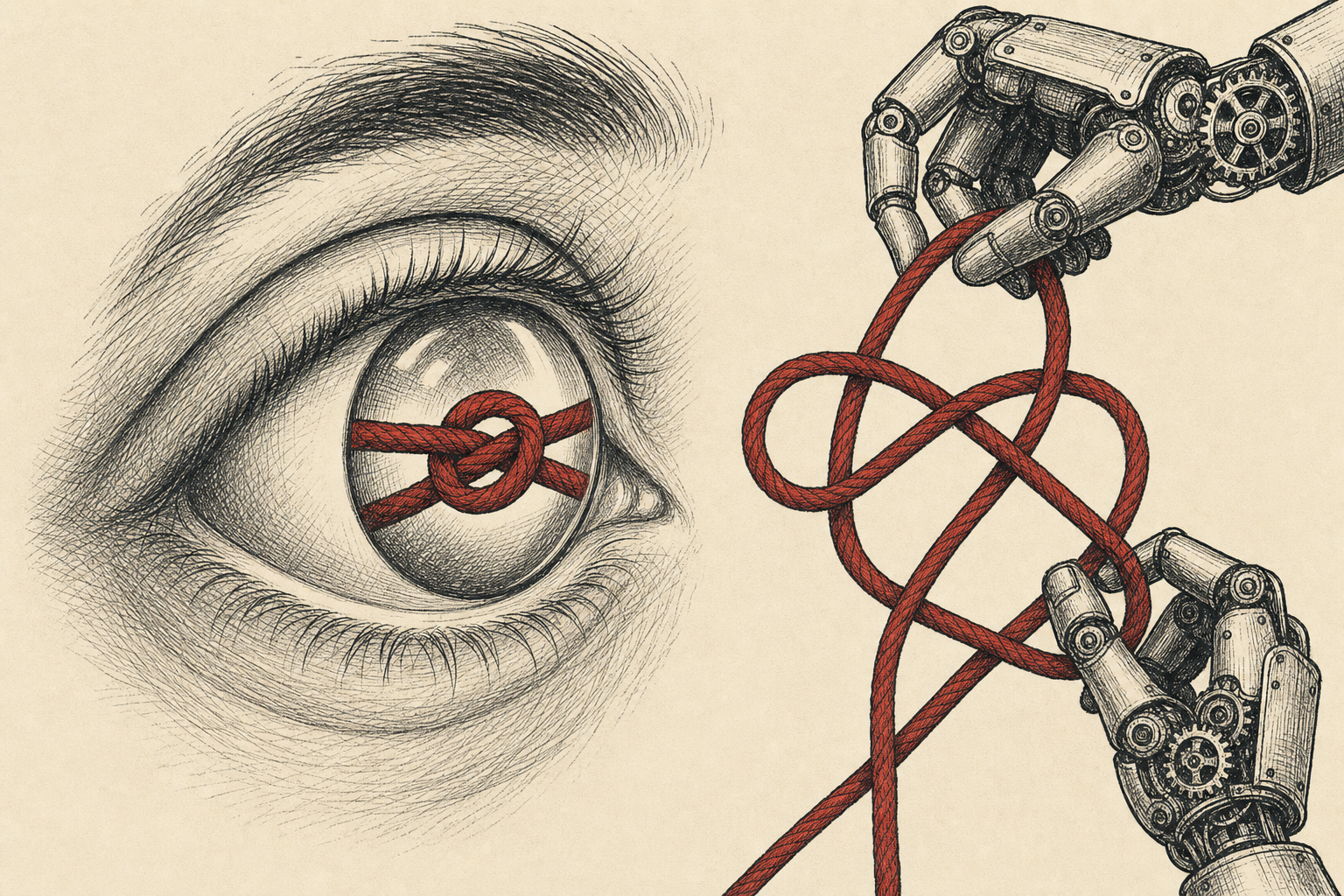
Published by Microsoft Research on August 12, 2026, MindTopo tests 3D topological intuition rather than Euclidean distance, direction, size or position, covering five categories: continuity, separation, order, enclosure and knots. Reasoning questions use rendered scenes such as connected mazes, fenced sheep and true knots; planning requires legal action sequences to rotate pipes, draw separators, rearrange blocks, trap moving agents or untangle ropes without strands crossing. Controlled simulators provide exact ground truth and adjustable difficulty, separating visual perception failures from failures to preserve relationships during change.
Across proprietary and open-weight multimodal models, static reasoning consistently beat interactive planning, while both remained well below human performance, especially over many actions. Static errors often missed walls, openings or crossings; planners lost goals across turns, ignored later consequences or proposed moves violating environment dynamics. Image generation sometimes helped when a relation fit one frame but was unreliable across sequential moves; video rollouts often changed topology or broke task dynamics. MindTopo points toward explicit topological state or world models that preserve structural constraints for robots, accessibility tools and interactive assistants.
The authors are Yunfei Ge, Anbang Liu, Qineng Wang, Johnalbert Garnica, Zihan Wang, Reuben Tan, Jianfeng Gao, Ruohan Zhang, Yining Hong, Jiajun Wu and Manling Li. Biographies identify Northwestern University and Stanford University roles, while Gao is listed as technical fellow and corporate vice president; the article also links Azure AI Foundry Labs and Azure AI Foundry.
Positives
- Five task categories measure continuity, separation, order, enclosure and knots across both reasoning and planning.
- Controlled simulators supply exact ground truth and adjustable difficulty, helping distinguish visual errors from failures to track changing structure.
- Legal action constraints prevent artificial solutions, including passing one rope strand through another.
- Image generation sometimes improved performance when the relevant topological relationship was visible within one frame.
- MindTopo offers a diagnostic path toward safer robots, accessibility tools and interactive assistants.
Risks & concerns
- Static reasoning exceeded interactive planning across proprietary and open-weight models, but both remained well below human performance.
- Planning failures included losing goals over multiple turns, overlooking later consequences and proposing actions that violated environment dynamics.
- Static errors commonly began by missing walls, openings or crossings in rendered scenes.
- Image generation remained unreliable across sequential crossings or moves, despite occasional single-frame benefits.
- Video rollouts frequently altered topology or violated task dynamics instead of preserving structural constraints.