Microsoft Orchard Framework Targets Scalable Open-Source Agentic AI
Microsoft Research unveils Orchard, an open framework that trains compact AI agents across coding, web and assistant tasks using reusable infrastructure.
Summary
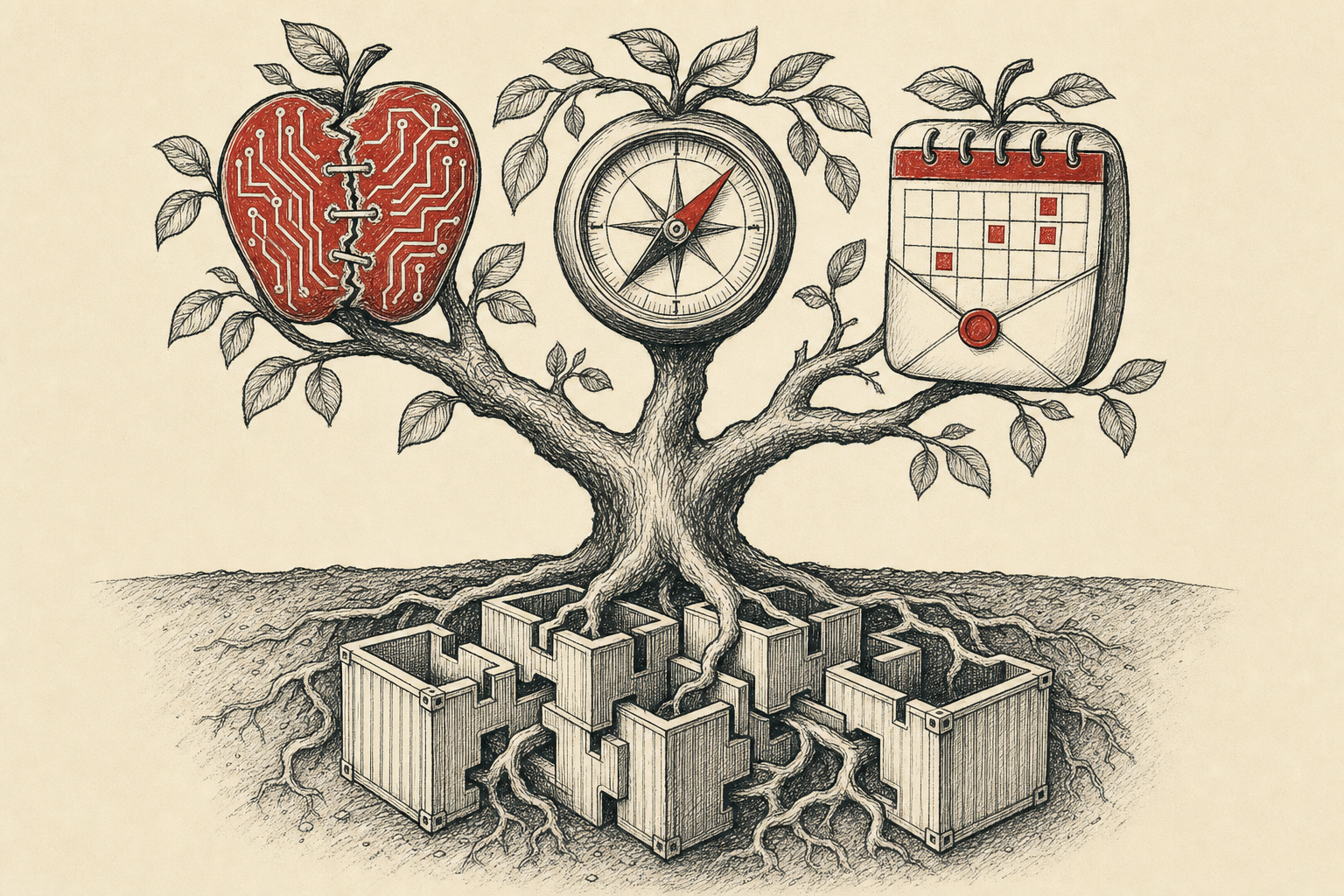
Microsoft Research announced Orchard on August 3, 2026, presenting it as an open-source framework for training and evaluating autonomous AI agents at scale. The project is built around Orchard Env, a reusable environment service intended to support multiple task domains and stages of development rather than tying infrastructure to one model or training system. Microsoft is releasing three domain-specific workflows, Orchard-SWE for software engineering, Orchard-GUI for web navigation, and Orchard-Claw for personal-assistant work, along with associated training data and evaluation methods.
Orchard Env uses Kubernetes to create, manage, and remove thousands of isolated components in parallel. It provides shared capabilities such as sandbox management, command execution, file access, network controls, a REST API, and agent integration. A lightweight proxy captures model calls made through stateful deployment harnesses, while each rollout runs in a separate container. According to Microsoft, this lets researchers train agents directly within systems such as Codex, OpenClaw, and ZeroClaw instead of training against a simplified substitute that may behave differently in production. The same infrastructure can then be reused for data generation, reinforcement-learning rollouts, and evaluation.
For software engineering, Microsoft says Orchard-SWE was trained using 107,000 interactions distilled from MiniMax-M2.5 and Qwen3.5-397B across GitHub issues. Its workflow retains productive steps from unsuccessful attempts, applies Balanced Adaptive Rollout reinforcement learning, and adds step-level teacher scoring and a process reward model. Performance on SWE-bench Verified increased from a 61.4% baseline to 69.1% after Balanced Adaptive Rollout and 69.7% with dense-reward methods. A separate 4-billion-parameter value model, trained on trajectories from 20 earlier experiments, reranked candidate solutions and raised the reported score to 73.0%. Microsoft characterizes this as competitive with frontier systems more than 10 times larger, while Orchard-SWE uses roughly 3 billion active parameters in its 35B-A3B configuration.
Orchard-GUI applies the framework to browser tasks using a 4-billion-parameter vision-language model, 400 distilled demonstrations, and 2,200 open-ended training tasks. Microsoft reports success rates of 74.1% on WebVoyager, 67.0% on Online-Mind2Web, and 64.0% on DeepShop, producing a 68.4% average. Orchard-Claw was trained on only 200 synthetic personal-assistant tasks and completed 59.6% of Claw-Eval tasks when allowed as many as three attempts. Its result rose to 73.9% when paired with ZeroClaw. Under the Codex harness specifically, Orchard training increased success from 18.6% for the untrained model to 51.5%.
The broader significance is Orchard’s attempt to make agent research less dependent on proprietary sandboxes, closed pipelines, and inaccessible datasets. Its reported results suggest that carefully designed environments and training methods can make comparatively small open-weight models useful for coding, browsing, and productivity workflows. However, the performance figures and comparisons come from Microsoft’s own announcement, and the article does not describe independent replication or provide detailed operating-cost measurements. Microsoft’s next research direction is cumulative agent learning: retaining old trajectories as reusable assets, including value models, so later agents can build on previous experience. How well Orchard generalizes beyond the named benchmarks, harnesses, and controlled evaluations remains uncertain.
Positives
- Orchard Env can create and manage thousands of isolated Kubernetes-based components in parallel while supporting data collection, reinforcement-learning rollouts, and evaluation through the same service.
- Orchard-SWE improved from 61.4% to 69.7% on SWE-bench Verified, and value-model reranking increased the Microsoft-reported result to 73.0% with roughly 3 billion active model parameters.
- Orchard-GUI achieved a reported 68.4% average across WebVoyager, Online-Mind2Web, and DeepShop after training with 400 distilled demonstrations and 2,200 open-ended tasks.
- Orchard-Claw reached 73.9% on Claw-Eval when paired with ZeroClaw, despite being trained on only 200 synthetic tasks.
- Microsoft is releasing Orchard’s environment service, domain-specific training pipelines, datasets, and evaluation methods for use by the wider research community.
Risks & concerns
- Orchard-SWE still depends on sparse reinforcement-learning feedback because hidden tests generally reveal only whether a final software patch passed or failed.
- Orchard-Claw completed only 59.6% of Claw-Eval tasks on its own even when allowed up to three attempts, leaving a substantial share of workflows unresolved.
- Under the Codex harness, Orchard training raised Orchard-Claw’s success rate to 51.5%, but nearly half of the evaluated tasks still failed.
- The benchmark results and claims of competitiveness with larger proprietary systems are reported by Microsoft, and the article does not cite independent replication.
- Although Orchard is described as cost-effective, Microsoft’s announcement does not provide specific training, compute, or deployment cost figures.