MongoDB CTO Says Agentic Memory Comes After Token Maxxing
MongoDB's Pete Johnson argues agentic memory can cut AI costs by reusing answers through semantic search, access controls and human curation over time.
Summary
In a MongoDB sponsored VentureBeat article published August 10, 2026, Pete Johnson, MongoDB Field CTO for AI, draws on more than 100 customer conversations across 15 cities in six countries during the first half of 2026. He contrasts roughly 60 years of database development with about 18 months of modern AI agents, arguing that no default LAMP stack yet exists. Early 2026's token maxxing trend drew fast backlash because token volume measured activity rather than results, exposing the context window as the scarce resource.
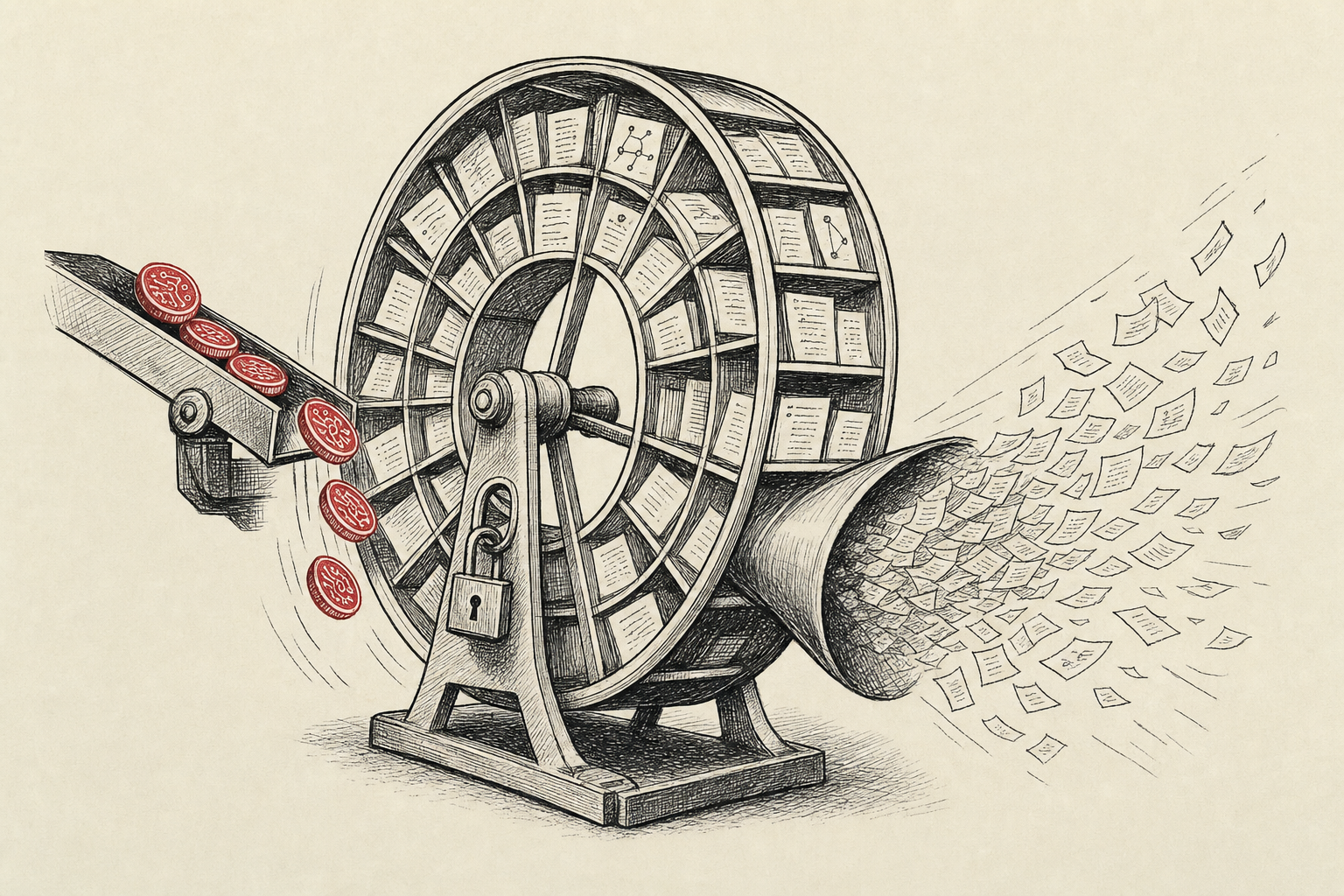
Johnson proposes persistent, queryable memory outside the model that retains generated outputs across loops and sessions, applies role based access control, and retrieves unstructured content by semantic similarity rather than exact keys. His emerging enterprise pattern combines native semantic search, stored content and access controls, then reranks retrieved answers and asks a leaner, often open weight model whether one is sufficient. Accepted answers bypass the expensive generative model; rejected ones trigger fresh generation that is saved for reuse, potentially making agents faster and cheaper with use instead of scaling costs linearly. Mature systems would separate taxonomic memory, including organizational terminology, from procedural memory, including task sequences, while humans inject valuable knowledge, prune noise and promote effective procedures. Johnson expects memory to become agents' first settled infrastructure layer while other components remain comparable to hand wired CGI-BIN.
Positives
- More than 100 customer conversations indicate enterprises are converging on persistent memory as a core agent architecture.
- Semantic search can retrieve prior generative output by meaning, preserving reasoning already purchased across loops and sessions.
- Role based access control can share useful memories across an enterprise while limiting exposure of restricted material.
- A leaner, often open weight model can approve retrieved answers and avoid invoking a more expensive generative model.
- Taxonomic and procedural memory can preserve organization specific definitions and established task sequences.
- Human curation can inject valuable memories, remove noise and prioritize procedures that work reliably.
Risks & concerns
- Early 2026 token maxxing measured activity rather than outcomes and could make costs grow linearly with usage.
- About 18 months of agent development has not produced a settled default stack comparable to LAMP.
- Context windows remain scarce, forcing systems to choose which information deserves inclusion.
- Stitching storage, semantic search and access controls across three systems creates architectural fragility.
- Generated memories vary in value, and poor retention or ranking can turn the corpus into noise.
- Human pruning and promotion remain necessary because agents cannot reliably curate every saved memory themselves.