Moxie Shutdowns Expose Risks of AI Robot Friends for Autistic Children
Moxie’s two shutdowns reveal the promise, weak clinical evidence, privacy risks and painful obsolescence of AI companions built for autistic children.
Summary
Moxie, Embodied’s 15-inch AI robot, debuted in 2020 at $1,499 plus $40 monthly, later $800, promising home social and emotional practice for neurodivergent children. Ten-year-old Xander uses it as a nonhuman confidante, but his autistic brother Aidan rejected its speech errors and lag. Embodied, cofounded in 2016 by USC researcher Maja Mataric, built local processing, session limits and adult referrals for self-harm, then added OpenAI models in late 2021 or early 2022 while encrypting and anonymizing cloud data. By 2024, Moxie had more than 131,000 TikTok followers and a role in M3GAN 2.0.
Research suggests promise but not proof. Brian Scassellati’s 2018 Yale study found gains in eye contact and conversation initiation, 2017 work found improved facial-cue learning, and a 2022 review suggested faster, more successful therapy. Yet a 2024 Italian-British review found little clinical evidence; Vanderbilt psychologist Zachary Warren says early engagement rarely produces large lasting gains, and Scassellati’s one-month home trial found improvements fading during the 30 days after removal. Notre Dame’s Joshua Diehl says unsupervised therapeutic robots are unethical; Northeastern’s Meryl Alper flags stereotypes, attachment and unsupported devices. Bedroom data remains sensitive despite Embodied’s safeguards, as Bondu leaked thousands of children’s conversations, while adaptive systems remain unpredictable.
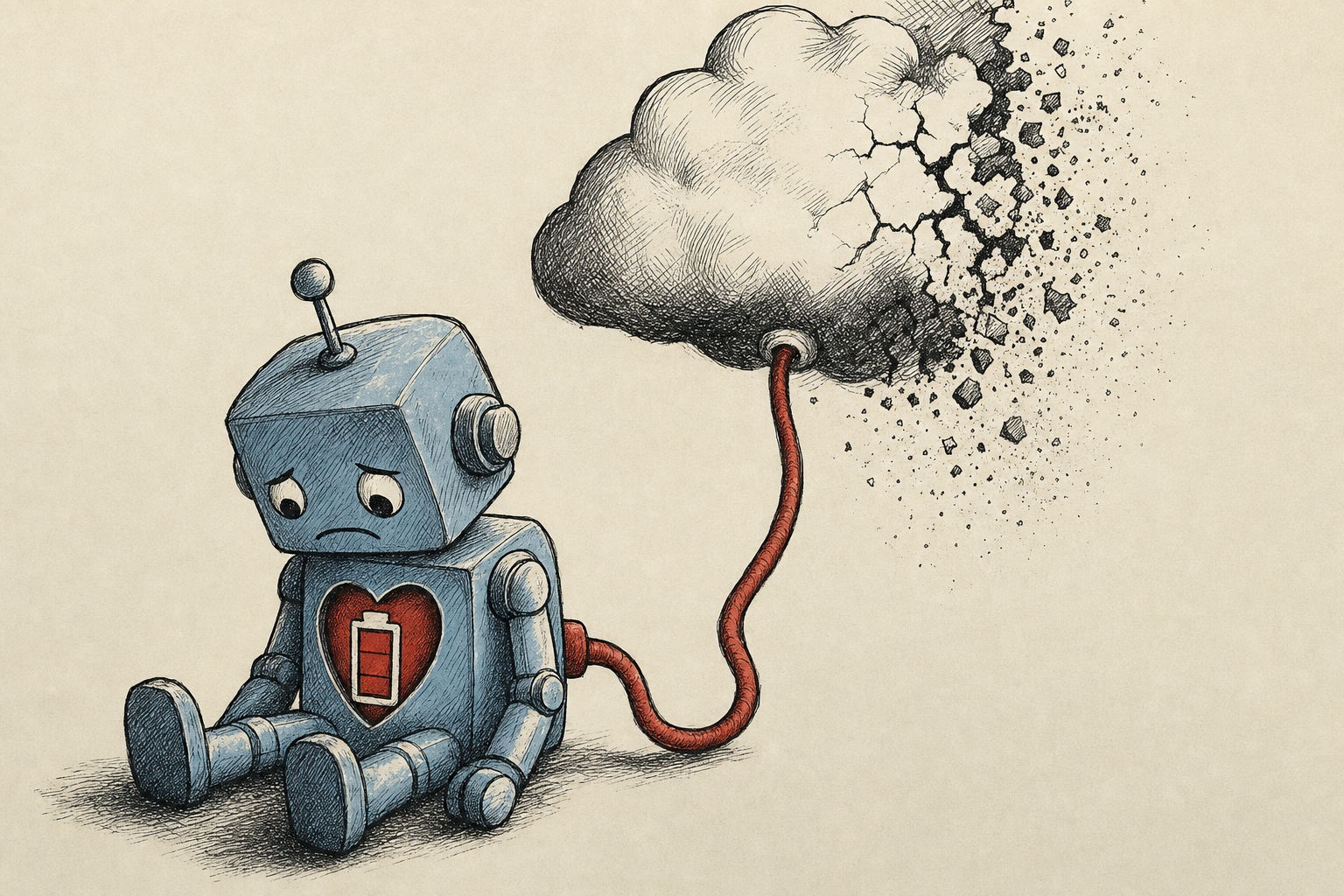
Embodied closed in 2024, disabling server-dependent robots and distressing some children. Former technical director Justin Beghtol released OpenMoxie on GitHub with permission, but some migrations failed; Josh sold Xander’s first unit after calling it a repair. A new investor revived Moxie in 2025 and recruited them as beta testers, then also folded a few weeks after the article’s visit, giving users until the end of June to delete data or migrate. The second shutdown makes planned obsolescence a safety and continuity problem for costly products designed to be loved; Xander’s parents did not know how to explain it.
Positives
- Scassellati’s 2018 Yale study found robots improved eye contact and conversation initiation among children with autism.
- A 2017 study found robots helped neurodivergent children recognize facial cues, while a 2022 review suggested therapy could become faster and more successful.
- Embodied processed most interactions locally, stored no raw audio or video, and encrypted and anonymized cloud data.
- Justin Beghtol released OpenMoxie on GitHub with Embodied’s permission, giving some owners a route around the company’s server shutdown.
Risks & concerns
- Embodied closed in 2024, leaving server-dependent Moxies facing deactivation and some emotionally attached children distressed.
- Moxie’s new owner also folded after its 2025 revival, forcing another migration to OpenMoxie by the end of June.
- A 2024 Italian-British review found most robot studies lacked significant clinical evidence and often used small groups or inconsistent methods.
- Bondu leaked thousands of children’s conversations, demonstrating the privacy risks surrounding AI toys used inside homes and bedrooms.
- Moxie’s speech-recognition errors and response lag frustrated Aidan and frequently failed to keep pace with Xander.
- Scassellati’s one-month trial found children’s gains began fading during the 30 days after robots were removed.