NVIDIA Open-Sources cuFile as AI Storage Demands Surge
NVIDIA open-sources cuFile and unites 40-plus vendors to speed secure GPU data access as AI agents push memory and storage infrastructure to its limits.
Summary
NVIDIA used the Future of Memory and Storage conference, held Aug. 4-6, 2026, in Santa Clara, California, to present a broader strategy for making storage an active component of AI computing. The company argues that increasingly large datasets, long context windows and data-hungry AI agents are exceeding available system memory. GPUs can also initiate thousands of storage operations concurrently, putting pressure on systems that must encrypt, compress, verify and reconstruct data while serving those requests.
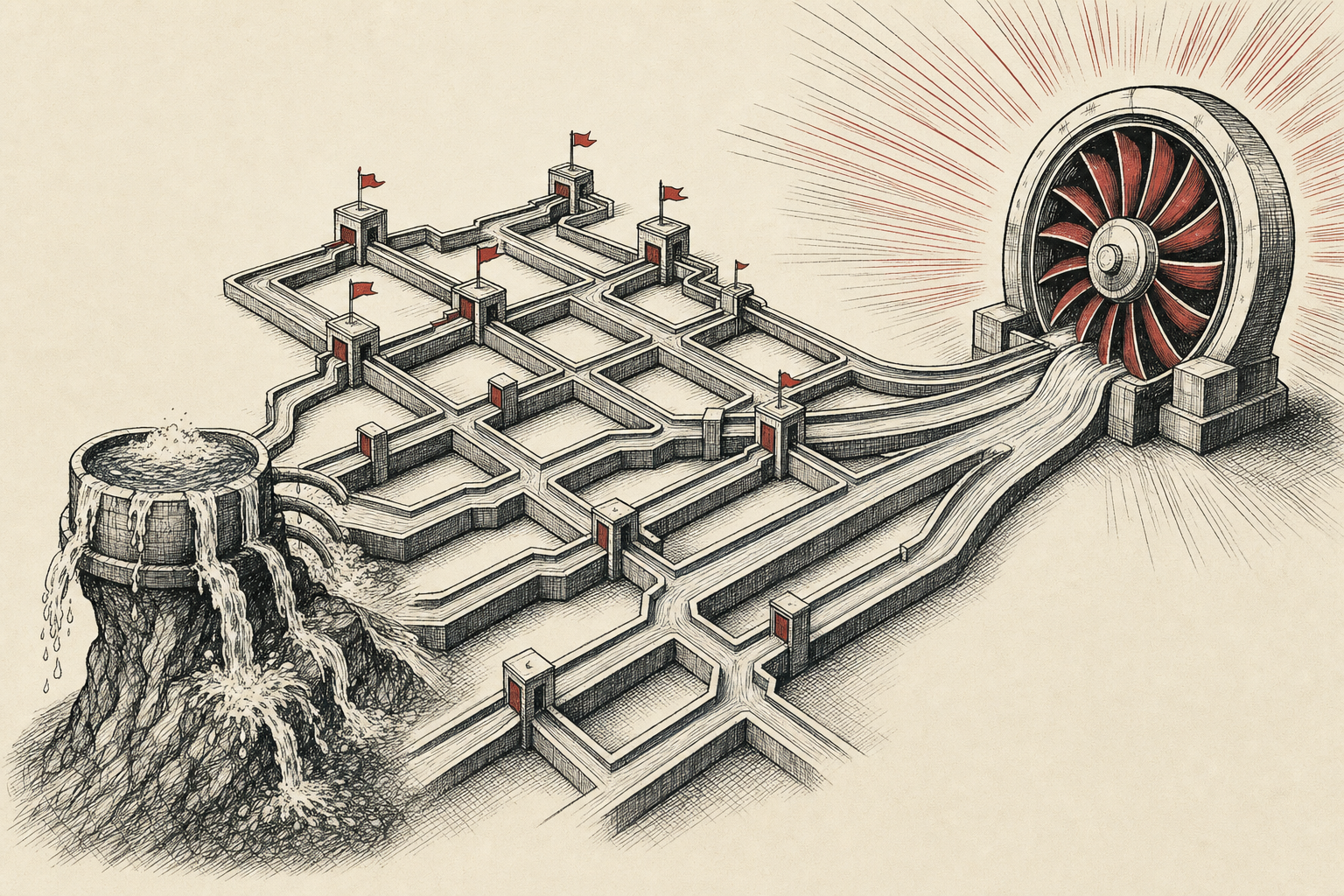
The central software announcement is that NVIDIA is open-sourcing the cuFile application programming interfaces and the underlying vertical storage software stack. cuFile, a component of NVIDIA GPUDirect Storage, allows GPUs to read from and write to storage without routing every operation through a CPU. NVIDIA says cuFile uses large numbers of GPU threads and high-bandwidth memory to provide secure access in microseconds. Google, Intel, Meta and NVIDIA are listed as inaugural maintainers of the contribution site, which will accept outside work and support optimization across different hardware and software platforms. NVIDIA also connects the project to the Open Secure AI Alliance and faster access to data used by AI-based cybersecurity tools.
NVIDIA additionally introduced Storage-Next, an initiative involving more than 40 storage and flash companies, including DDN, KIOXIA and Micron. It is intended to coordinate storage manufacturers, controller suppliers, cooling and thermal specialists, orchestration providers and standards organizations around GPU-driven storage behavior and open interoperability standards. The associated SCADA framework, short for scaled, accelerated data access, is designed to let highly parallel GPUs retrieve only the application data they need directly into high-speed memory. DDN is integrating SCADA with Infinia, its software-defined data intelligence platform, although the article does not provide deployment dates or independent performance results for that integration.
The hardware foundation includes NVIDIA Vera BlueField-4 STX, a modular rack-scale platform incorporating Vera Rubin technology, Vera BlueField-4 storage processors and Spectrum-X Ethernet networking. NVIDIA says STX uses its unified DOCA security stack for continuous policy enforcement along the AI data path, while CMX Context Memory Storage supplies a dedicated context tier for long-context, multi-turn agentic inference. In a benchmark cited from an NVIDIA technical blog, the Vera CPU produced up to 3.21 times the throughput of an x86 CPU in a two-stage compression-and-encryption pipeline. That is a vendor-reported maximum rather than an independently verified general comparison, and the supplied article does not detail the x86 processor, test conditions or full range of results.
The significance is that storage performance and security could increasingly determine how effectively enterprises use expensive GPU infrastructure. NVIDIA’s design separates untrusted, performance-sensitive application components from a privileged component that establishes protected access to approved storage under standard Linux security mechanisms. If broadly adopted, this model could reduce CPU overhead and help GPUs remain productive while handling larger AI workloads. What happens next depends on outside contributions to cuFile, implementation by Storage-Next members and the emergence of genuinely interoperable standards. Real-world cost, compatibility, security and performance across non-NVIDIA environments remain uncertain because the article is an NVIDIA announcement rather than an independent evaluation.
Positives
- NVIDIA is open-sourcing the cuFile APIs and their supporting storage stack, allowing outside contributions and potential optimization across multiple hardware and software platforms.
- Google, Intel, Meta and NVIDIA are named as inaugural maintainers of the cuFile contribution site, giving the project backing from several major technology companies.
- Storage-Next already includes more than 40 storage and flash vendors, with DDN, KIOXIA and Micron among the participants working on GPU-oriented storage standards.
- NVIDIA reports that its Vera CPU achieved up to 3.21 times the throughput of an x86 CPU in a two-stage compression-and-encryption benchmark.
- SCADA is designed to transfer only the data an application needs directly from storage into GPU high-speed memory, which could reduce unnecessary movement and improve accelerator utilization.
- The proposed security model keeps performance-sensitive user components outside the trusted computing base while using a privileged component to configure protected storage access under Linux security protocols.
Risks & concerns
- The 3.21-times throughput figure comes from an NVIDIA technical blog, and the article does not identify the compared x86 processor or provide enough methodology for independent assessment.
- Direct application-to-storage access can create memory-corruption or isolation risks if implemented carelessly, a danger NVIDIA explicitly acknowledges when explaining SCADA’s design.
- Thousands of simultaneous storage requests from AI agents can turn encryption, compression, verification and data reconstruction into infrastructure bottlenecks.
- The article does not provide shipping dates, pricing or broad production-deployment evidence for Storage-Next, SCADA, CMX Context Memory Storage or DDN’s integration.
- The benefits of interoperability remain prospective because Storage-Next still needs participating companies and standards bodies to convert coordinated designs into widely adopted open standards.
- The announcement is a vendor-authored account, so real-world performance, security and compatibility, particularly on non-NVIDIA systems, remain uncertain.