Rare Booksellers Fear AI Bulk Buyers Are Destroying Scarce Volumes
Rare booksellers flag suspicious AI bulk orders as the Internet Archive shows how fragile volumes can be digitized intact, carefully, one page at a time.
Summary
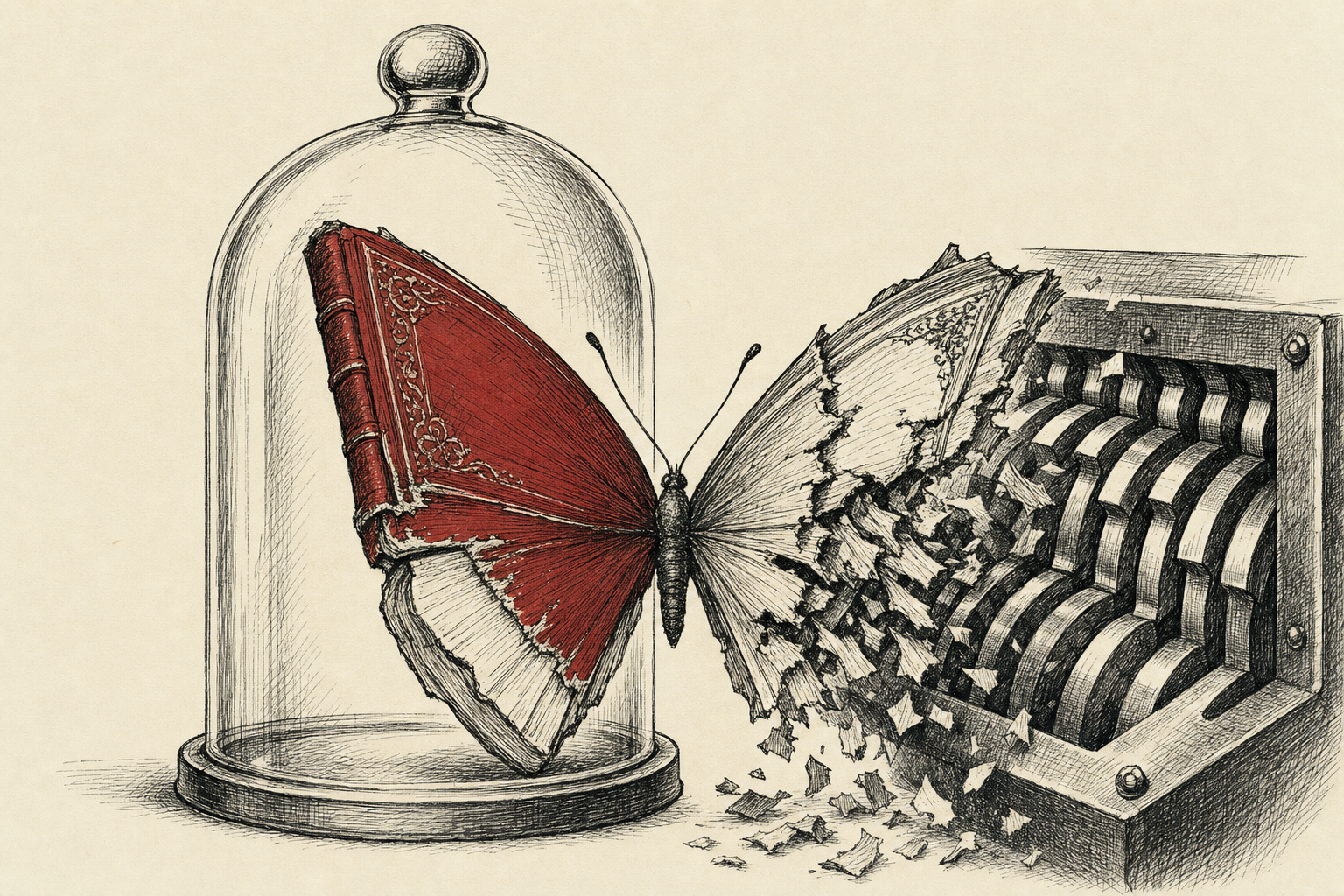
Rare booksellers suspect AI companies are buying and destroying scarce volumes because cutting bindings is the cheapest, fastest route to scan millions of books for model training. A summer 2025 lawsuit revealed Anthropic destroyed millions of print books under the secret name Project Panama, but Anthropic says it never destroyed rare books. The Atlantic cited Telegraph claims that Silicon Valley shredded millions of rare books and 404 Media reporting that ISBNdb marketed bulk sourcing to AI firms. On August 11, 2026, Ireland’s Kennys flagged an unnegotiated order for 5,000 obscure titles, unlike normal university or library purchases. Tomás Kenny said Kennys will reject likely AI training orders to protect authors’ rights and access to hard to find books, although sellers could gain short term revenue.
Google patented nondestructive scanning in 2009, but curved pages can distort text, workers can miss or obscure pages, and the method costs time and money. The Internet Archive found commercial scanners with vacuum powered page turning arms unsuitable for brittle or rare collections. Eliza Zhang, an Archive scanner since 2010, follows Andrea Mills’ guidance by using clean, dry hands, a foot pedal to lift glass, adjusted cameras, foldout reminders and proprietary software that halts for skipped or blurry pages. By 2021, she had scanned more than 3 million pages, 14,000 foldouts and 18,000 mostly book items toward zero errors. Chris Freeland says that process remains current, and Zhang’s video drew 1.5 million Twitter views. OpenAI and Microsoft are helping Harvard train models on about 1 million public domain books dating to the 15th century. Elon Musk says xAI will preserve and scan rare books intact, but critics say he neither promised to spare every book nor defined rare.
Positives
- Eliza Zhang had scanned more than 3 million pages, 14,000 foldouts and 18,000 items by 2021 without cutting bindings.
- OpenAI and Microsoft are helping Harvard digitize about 1 million public domain books dating to the 15th century.
- Google’s 2009 patent offers AI companies a nondestructive alternative for digitizing books.
- Tomás Kenny plans to reject suspected AI training orders to protect authors’ rights and access to scarce titles.
- Anthropic denies destroying rare books, despite its acknowledged destruction of millions of print books for training.
Risks & concerns
- Anthropic destroyed millions of print books for AI training under the concealed codename Project Panama, a summer 2025 lawsuit revealed.
- Kennys received a suspicious, unnegotiated order for 5,000 obscure titles on August 11, 2026.
- Cutting bindings remains the cheapest and fastest scanning method, creating incentives to sacrifice physical books.
- Automated scanners performed poorly on brittle books, rare volumes and special collections, while careful manual scanning requires more time and investment.
- Elon Musk promised xAI would preserve rare books but did not define rarity or pledge that every purchased book would survive.