Stanford Researcher Samuel King's AI-Designed Viruses Kill Bacteria
Stanford researcher Samuel King explains how generative AI proposed viral genetic blueprints in 2025, and why AI-generated life could come next in a 2026 talk.
Summary
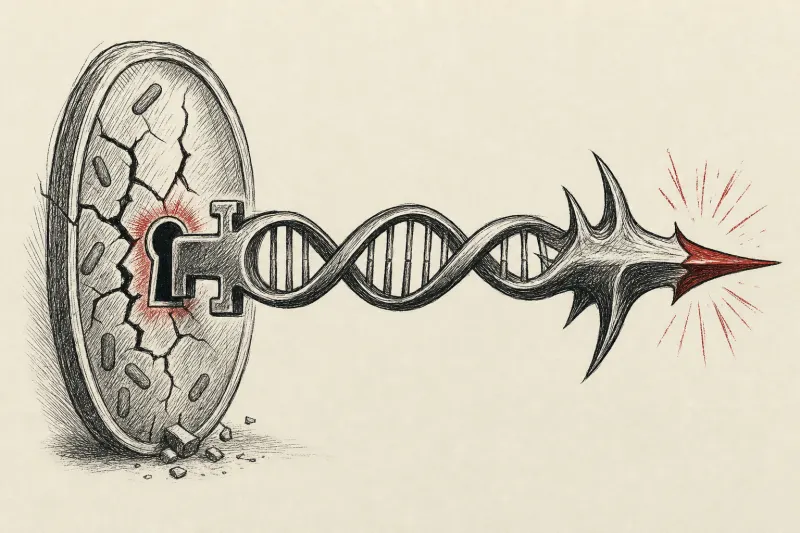
In 2025, Stanford University bioengineering PhD candidate Samuel King, also affiliated with Arc Institute, used a generative AI model to propose genetic blueprints for microscopic viruses. His AI-designed viruses worked and are already killing bacteria. The experiment does not yet constitute AI-generated life, though creating it is framed as a possible next step and a new way to view biology.
Senior AI reporter James O'Donnell interviews King, an Innovators Under 35 honoree, in a subscriber-only session available in audio and video. It was recorded Friday, October 16, 2026, and published at 18:00 UTC. The synopsis does not identify the model or explain the methodology.
Positives
- In 2025, Samuel King used generative AI to propose genetic blueprints for microscopic viruses.
- King's AI-designed viruses worked and are already killing bacteria.
- King was selected as an Innovators Under 35 honoree for work exploring new ways to view biology.
- The October 16, 2026, interview is available in both audio and video formats.
Risks & concerns
- The experiment does not yet constitute AI-generated life, leaving the proposed next step unrealized.
- The session synopsis identifies neither the generative AI model nor its methodology.
- Access to James O'Donnell's interview with King is restricted to subscribers.