Warp Factories Brings Ready-Made AI Software Factories to Smaller Companies
Warp Factories gives smaller companies ready-made infrastructure to deploy, manage and measure AI coding agents across existing development workflows.
Summary
Warp introduced Warp Factories on Tuesday, August 18, 2026, offering smaller companies an infrastructure layer for deploying and operating AI coding agents without building an internal software factory from scratch. CEO Zach Lloyd said cloud execution, agent steering, local handoffs, shared memory and cross-agent evaluations otherwise require substantial infrastructure. Stripe already uses its “minions” system to automate work in its codebase, while Ramp has built a background agent that monitors its code after deployment.
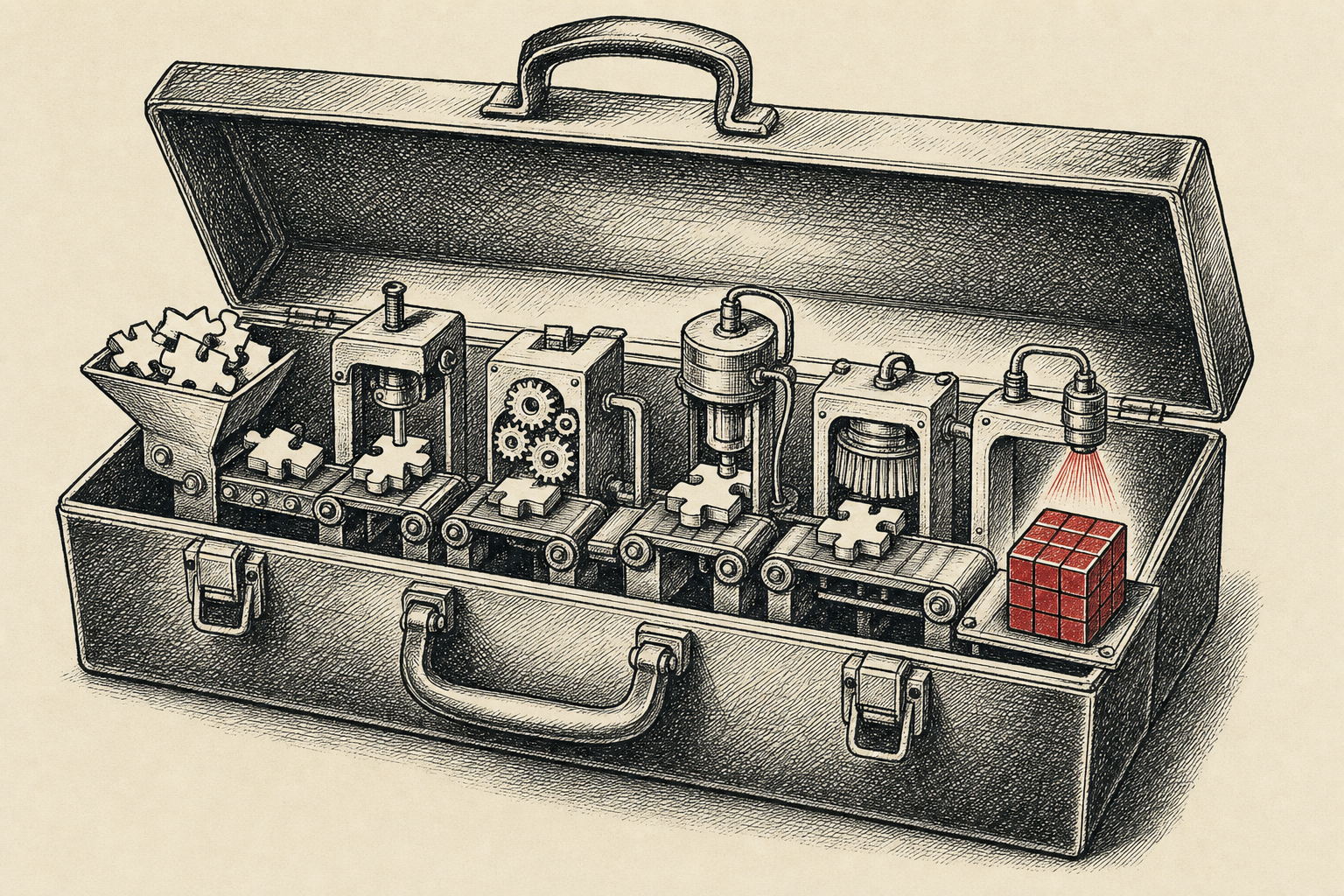
Warp Factories organizes agents around triage, specification, implementation, review and verification, with any phase eligible for automation. Customers can select coding models and harnesses, including Codex or Claude Code, and connect Linear, Jira, Slack and Teams. A shared environment lets managers compare configurations, measure performance, monitor token spending and use self-improvement loops to optimize operations. The system supports engineers rather than replacing them: Warp automates 30% to 35% of its weekly tasks, and Lloyd expects that share to rise as models, context and harnesses improve.
Positives
- Five development phases, triage, specification, implementation, review and verification, can each be automated within Warp Factories.
- Codex and Claude Code support lets customers choose their preferred coding model and harnesses.
- Linear, Jira, Slack and Teams integrations connect agents with existing ticketing and communication workflows.
- Shared agent infrastructure enables configuration comparisons, performance measurement, token monitoring and automated self-improvement loops.
- 30% to 35% of Warp’s weekly tasks are already automated, with Lloyd expecting improvement as models, context and harnesses advance.
Risks & concerns
- 30% to 35% weekly automation at Warp leaves most tasks outside the company’s current agent workflows.
- Human control remains necessary for many tasks, so Warp Factories is not designed to replace software engineers.
- Cloud execution, agent steering, local handoffs, shared memory and cross-agent evaluations remain a substantial infrastructure challenge without a packaged system.
- Token spending still requires managerial monitoring as multiple agents operate within the shared environment.