Asana AWM Gives Enterprise AI Agents Shared Memory Without Exposing Secrets
Asana’s Agentic Work Management gives AI agents shared company memory, access controls, model routing and fixed per-task pricing for enterprise teams.
Summary
VentureBeat reported on August 3, 2026, that Asana is positioning Agentic Work Management, or AWM, as an operating layer for teams in which humans and AI agents work together. During a VB Transform 2026 discussion with VentureBeat’s Sam Witteveen, Asana chief product officer Arnab Bose said AWM is intended to overcome the stateless nature of conventional chatbots. Instead of responding only to one user and one prompt, its agents can retain workflow context, collaborate across projects and learn from completed work. Bose said the product is already being used successfully by several customers, including FedEx, although the article provided no adoption totals or performance benchmarks.
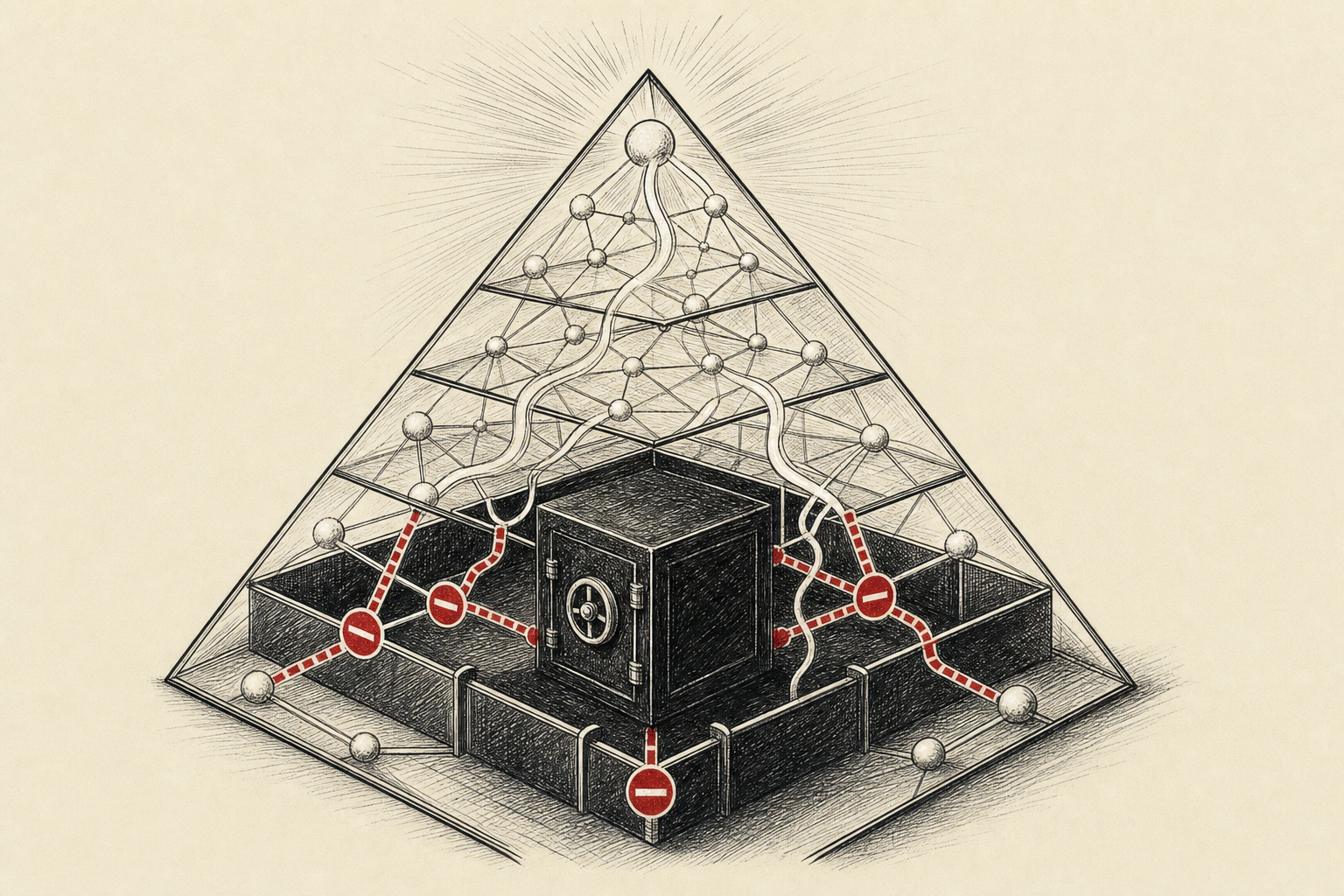
AWM is built on Asana’s Work Graph, an architecture developed over the company’s 18-year history. The graph connects individual tasks and their assignees and deadlines to projects, portfolios and organization-wide goals through a structure Asana calls the Pyramid of Clarity. This lets an agent use a shared record of who is responsible for work, when it is due and why it matters. After completing an assignment, the system records metadata about the result, including whether it changed project status or advanced a higher-level objective. That persistent state is meant to turn one-off AI outputs into workflows that colleagues can reuse.
Asana says it designed access controls to prevent shared memory from becoming a channel for disclosing confidential information. Bose used a secret merger-and-acquisition project as an example: knowledge created while an authorized executive works with an agent should not become available when an employee without access later uses that same agent. AWM therefore distinguishes between events that create reusable memory and those that merely execute a task. The article describes this design goal, but it does not provide technical implementation details, independent security testing or evidence showing how the controls behave under attack or configuration errors.
The platform also selects AI models dynamically. A complex assignment can be routed to a high-capability frontier model, with Bose naming Anthropic’s Opus and OpenAI models as examples, while simpler work can go to faster and less expensive models. Users are not expected to choose models, engineer prompts or assemble context manually. Asana also abstracts variable token and model costs by charging a fixed cost for each completed task, rather than exposing fluctuating credit consumption. The specific price, contractual limits and circumstances under which Asana absorbs unusually expensive runs were not disclosed.
CoreWeave offers the clearest reported example of AWM in operation. Its product managers can submit a standard Google document linked to product requirements, after which deterministic workflow rules create a project and assign work. Specialized agents monitor bottlenecks, forecast infrastructure costs and recommend approvals when estimates fit historical budgets, leaving employees to evaluate the outputs. The broader significance is that Asana is competing on workflow context, governance and reusable processes rather than on foundation models alone. That strategy also creates dependence on suppliers that are becoming rivals: Anthropic and OpenAI power parts of AWM while offering their own agents. What happens next will depend on whether Asana can demonstrate secure memory separation, measurable productivity gains and predictable economics at broader scale.
Positives
- AWM uses Asana’s 18-year-old Work Graph to connect tasks, projects, portfolios and corporate goals, giving agents persistent organizational context rather than only the contents of a single prompt.
- Asana designed access controls so that memory created in a restricted project, such as confidential merger-and-acquisition work, is not supposed to become available to unauthorized users of the same agent.
- Dynamic routing can send complex assignments to models such as Anthropic’s Opus or OpenAI offerings while directing simpler tasks to faster, cheaper alternatives.
- Asana charges a static cost per completed task, shielding customers from varying token use, model costs and run complexity, although the actual price was not disclosed.
- CoreWeave is using deterministic workflows and multiple AI agents to create launch projects, assign work, monitor bottlenecks and forecast infrastructure costs.
- Bose said several customers are already live on AWM, and FedEx has published a case study about its adoption.
Risks & concerns
- The article supplies no independent security assessment demonstrating that AWM’s access controls reliably prevent confidential shared memory from leaking across permission boundaries.
- Asana did not disclose customer totals, productivity measurements or error rates, making it difficult to quantify Bose’s claim that several AWM deployments are successful.
- Fixed per-task billing improves predictability for customers, but Asana did not reveal prices, usage restrictions or how it handles exceptionally expensive model runs.
- AWM depends in part on models from Anthropic and OpenAI, even as those providers release competing agent products and could become more direct rivals.
- CoreWeave’s agents can forecast costs and recommend approvals, creating a risk if inaccurate outputs receive insufficient human review; the reported workflow retains people as evaluators but gives no accuracy data.
- The system’s value depends on the completeness and quality of information in the Work Graph, while the article does not address stale records, missing context or conflicting project data.