NTT DATA AIVista’s Plan to Solve the ‘Last Mile’ of Enterprise Agentic AI
NTT DATA AIVista says enterprise AI value depends on domain context, model ensembles, guardrails and workflow change, not frontier models alone in production.
Summary
Publication context and verifiable facts: In a sponsored VentureBeat article published on August 3, 2026, NTT DATA AIVista CEO Bratin Saha discussed enterprise agentic AI with VentureBeat CEO and editor-in-chief Matt Marshall at VB Transform 2026. The presentation addressed why investment in advanced models often fails to produce operational value, particularly in regulated sectors. Saha’s central argument was that companies must build a broader production system around a foundation model, connecting it to proprietary data, workflows, security controls and organization-specific rules.
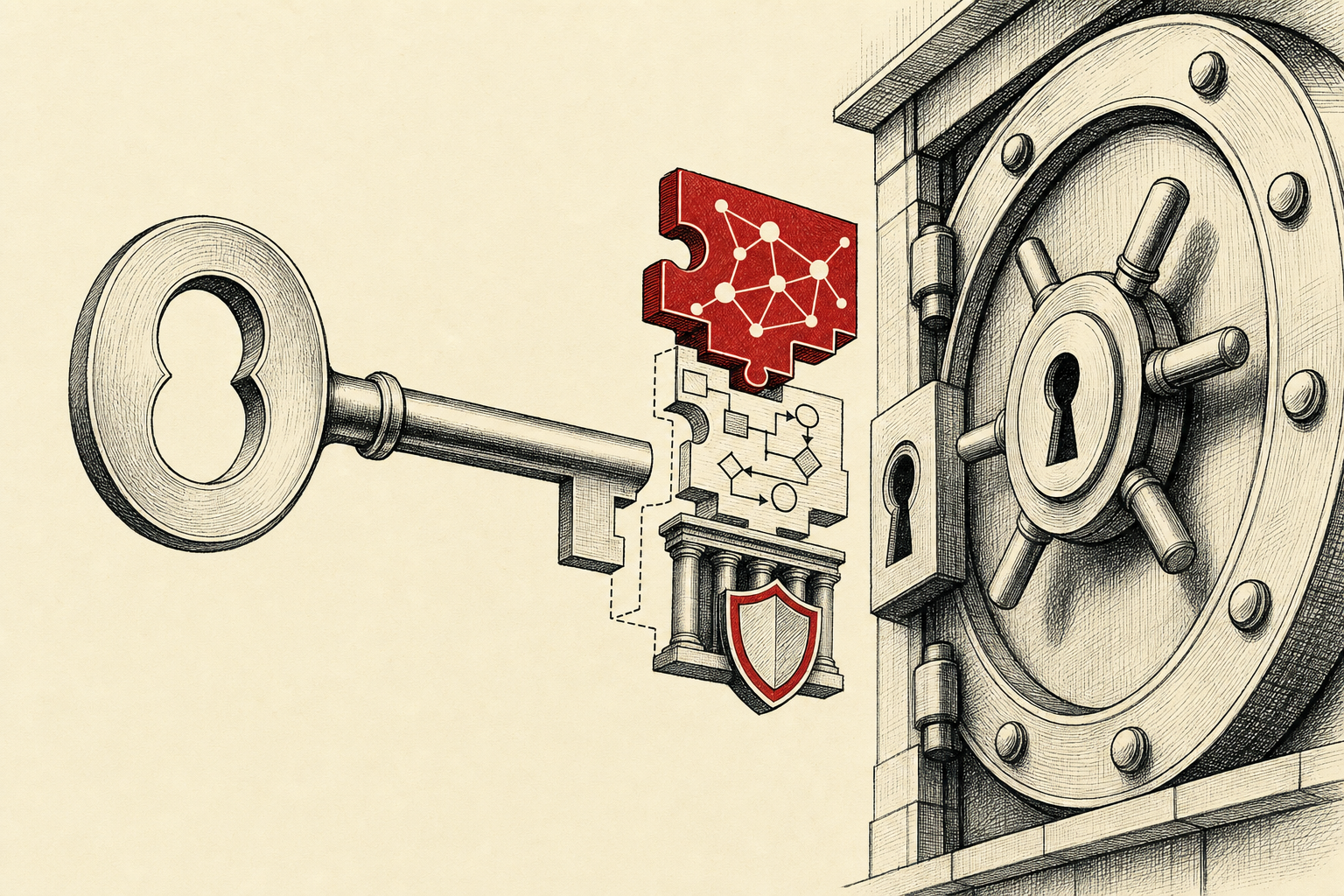
Company claims: Saha said frontier models do not consistently reach production-grade accuracy on complex tasks such as processing multinational insurance claims. He cited forms containing handwriting, numerous checkboxes and other difficult inputs, and named Fable 5, Opus 4.8 and GPT-5.5 as examples that can fall short without additional specialization. NTT DATA AIVista’s proposed approach has three parts: converting enterprise context into information AI can use, deploying an ensemble of models to manage costs, and applying specialized guardrails that detect errors and require a task to be attempted again.
The strategy does not depend on fine-tuning. The article says fine-tuning ranked last in VentureBeat’s latest enterprise survey of model-selection priorities, although it provides no sample size, methodology or underlying results. Instead, NTT DATA AIVista seeks to capture proprietary domain knowledge, including practices that were never written into formal operating procedures. AI specialists work with subject-matter experts and employees to document how work is actually completed, then encode that knowledge into an agent. Saha identified technology, domain expertise and change-management capability as the three requirements for successful deployment, arguing that technology itself is generally not the main constraint among his team’s clients.
NTT DATA AIVista advocates a phased implementation. It initially adds AI to existing mission-critical workflows because that requires less organizational disruption than replacing established processes. Once the embedded system is working, the company proposes redesigning the workflow more extensively to pursue larger gains. Its model ensemble combines frontier and open-source systems: lower-cost open-weight models can handle situations in which mistakes have limited consequences, while more capable frontier models are reserved for decisions where, according to Saha, the final few percentage points of performance justify the expense.
Why it matters and what remains uncertain: The approach could affect insurers, manufacturers and other regulated businesses whose AI systems must satisfy reliability, security and governance requirements. Keeping proprietary intelligence in the surrounding system may also make the underlying model easier to replace as open models improve. Some components, including guardrail generation and neurosymbolic models, are intended to scale across customers, but gathering each company’s undocumented knowledge remains bespoke. Saha cited NTT DATA’s 20 years of accumulated trust and insurance administration experience as a durable advantage. However, the sponsored article provides no customer names, accuracy benchmarks, deployment costs, return-on-investment figures or independent validation. Whether AIVista can reproduce its approach economically across many organizations therefore remains unresolved.
Positives
- NTT DATA AIVista uses an ensemble of frontier and open-source models so enterprises can reserve expensive reasoning systems for cases where errors carry serious consequences.
- The proposed system adds specialized guardrails that can identify an incorrect output and require the model to repeat the task rather than accepting the first answer.
- NTT DATA AIVista begins by embedding AI into existing mission-critical workflows, reducing the disruption associated with immediately replacing a functioning process.
- Keeping domain intelligence outside the foundation model may let customers switch models as open-weight and open-source alternatives improve.
- Saha said NTT DATA can draw on 20 years of accumulated insurance knowledge and trust when specializing agents for that regulated industry.
Risks & concerns
- Saha said many enterprise AI projects fail during implementation because of integration problems, weak domain specialization, insufficient governance and unclear ownership of results.
- Frontier models including Fable 5, Opus 4.8 and GPT-5.5 were described as inadequate out of the box for complex insurance workflows involving handwriting and dense forms.
- Capturing undocumented institutional knowledge requires bespoke interviews with employees and subject-matter experts, limiting how much of the deployment process can be standardized.
- In regulated industries, even a small performance gap can be costly, forcing enterprises to retain more expensive frontier models for high-risk decisions.
- The sponsored article supplies no independent benchmarks, named customer outcomes, implementation costs or ROI data to substantiate AIVista’s claimed advantages.