Three-Stage RAG Cascade Cuts LLM Inference Costs 6X
A three-stage RAG cascade routes only 10 to 15% of cases to an LLM, cutting inference costs roughly 6X while improving auditability and decision consistency.
Summary
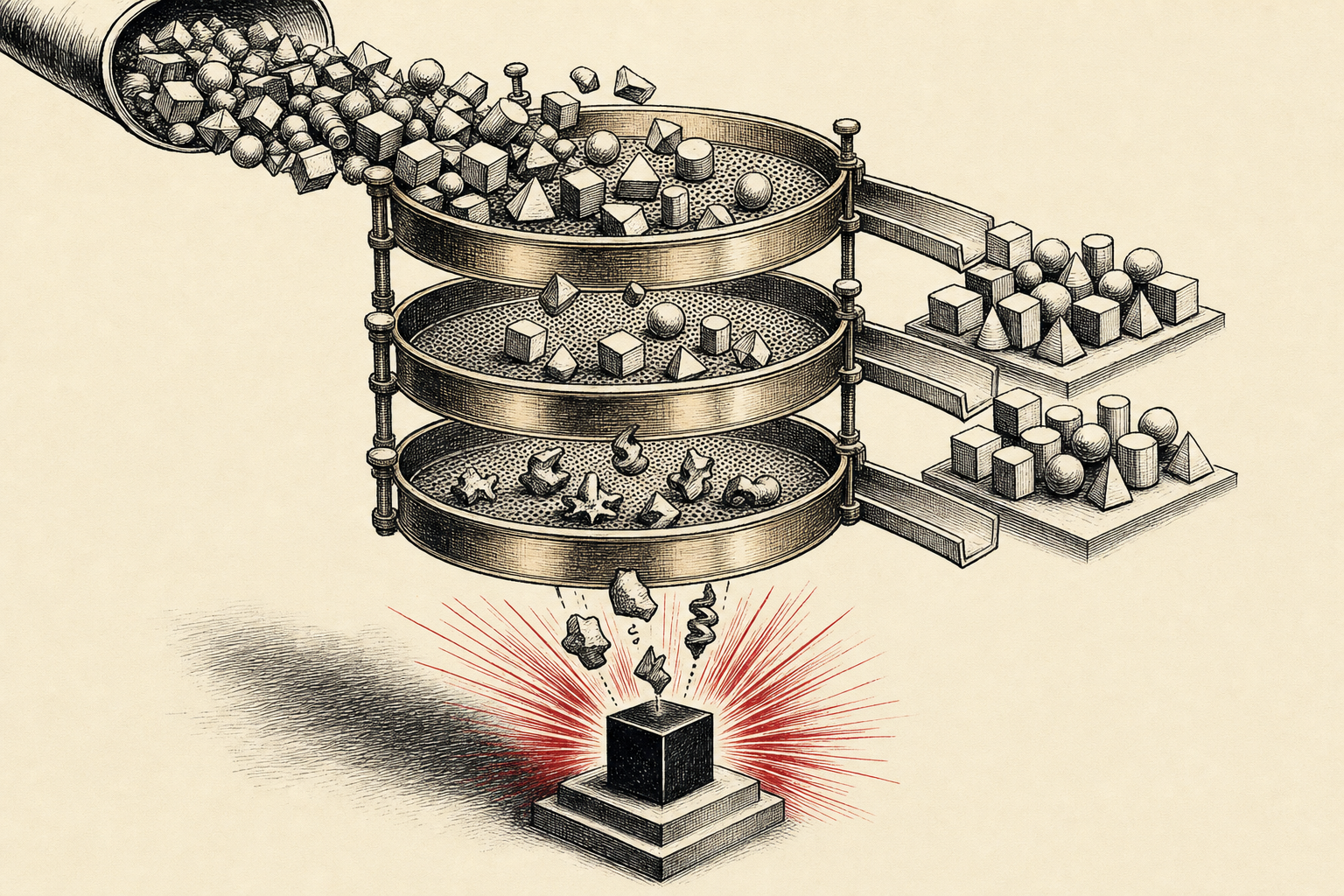
Vineet Vijay, a Lead AI and machine learning engineer, wrote in VentureBeat on August 16, 2026, that regulated, high stakes RAG classification needs a three-stage cascade rather than sending every ambiguous case to an LLM. All-LLM pipelines cannot provide durable, reconstructable audit trails, make latency and inference bills rise across tens of thousands of daily cases, and introduce drift into easy decisions. Stage one uses exact matches, structured comparisons and clear rules to resolve a majority, often more than half depending on data quality, without inference. Stage two retrieves relevant prior reviews, conflict-explaining documents and precedent. Stage three sends only the unresolved residue to the model. In one system, restricting LLM calls to the genuinely ambiguous 10 to 15% cut inference cost roughly 6X versus an all-LLM baseline and made consistency on the deterministic majority effectively perfect.
Because missed issues can cause harm while false flags cost review time and delays, prompts should make uncertainty trigger escalation, provide calibrated examples and consequences, and require confidence scores. Results below a chosen threshold go to human review regardless of classification. Vijay recommends measuring retrieval separately from final accuracy, oversampling stage-three cases so deterministic successes do not hide failures, and giving any LLM judge the production prompt’s asymmetric risk framing. Confirmed outcomes, including human reversals and correct resolutions, should return to the retrieval corpus so ambiguous-case handling improves rather than repeating mistakes.
Positives
- Routing only 10 to 15% of genuinely ambiguous cases to the LLM cut one system’s inference costs roughly 6X.
- Stage one can resolve more than half of cases through explainable exact matches, structured comparisons and clear rules.
- Deterministic handling made consistency on the resolved majority effectively perfect in Vijay’s example.
- Confidence thresholds send uncertain classifications to human reviewers regardless of the model’s proposed decision.
- Human reversals added to the retrieval corpus can improve future handling of similar ambiguous cases.
Risks & concerns
- All-LLM pipelines increase inference costs and latency when processing tens of thousands of cases daily with retrieved documents.
- Model decisions based only on retrieved context lack a durable path auditors can reconstruct without rerunning inference.
- LLMs can drift on easy cases that should have deterministic answers.
- Incorrect retrieval can make even a capable model produce a confident, well-reasoned but wrong classification.
- Production-weighted evaluation sets can hide stage-three failures behind numerous deterministic successes.
- LLM judges using symmetric error assumptions can favor the wrong tradeoff in high stakes classification.